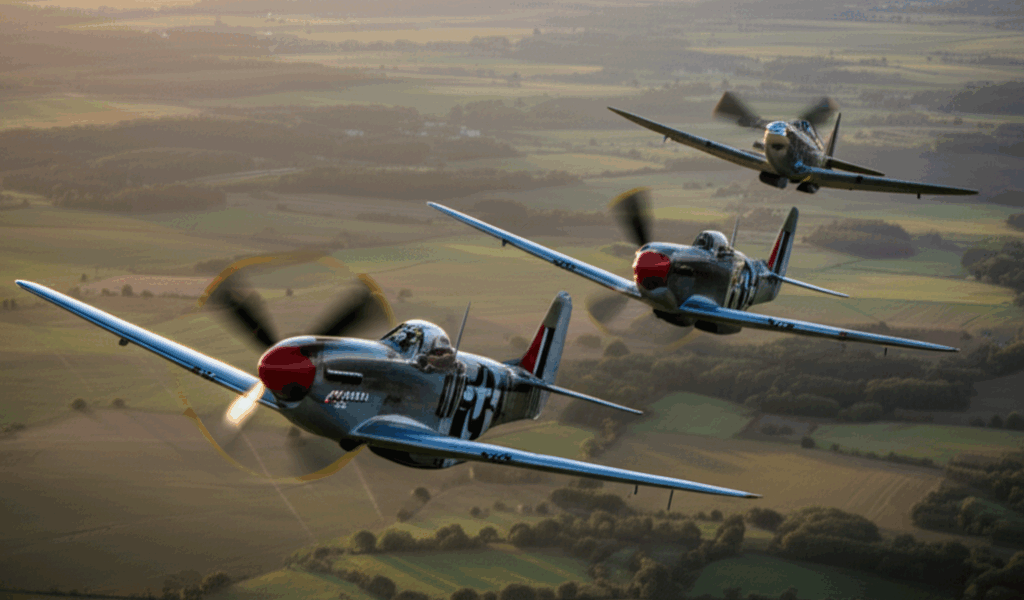
Reliving Aviation’s Golden Age
There’s something magical about vintage aircraft. The rumble of radial engines, the smell of avgas and oil (imagined, of course), and the tactile connection to aviation history draw pilots away from glass cockpits and fly-by-wire systems. Microsoft Flight Simulator’s third-party marketplace offers exceptional warbird and vintage aircraft add-ons that capture this magic beautifully.
1. Flying Iron Simulations – Spitfire Mk IXc
The Supermarine Spitfire needs no introduction. This legendary British fighter defined the Battle of Britain and became an icon of World War II aviation. Flying Iron’s rendition captures the aircraft’s legendary handling characteristics.
What makes it special:
- Authentic Merlin engine sounds recorded from real aircraft
- Detailed cockpit with functional gauges and switches
- Accurate flight model reflecting the Spitfire’s famous responsiveness
- Multiple livery options including squadron markings
- Realistic engine management with mixture, prop pitch, and boost
Price: ~$15-20 USD
The Spitfire demands pilot attention. Unlike modern aircraft that fly themselves, you’ll manage engine temperatures, watch for over-boosting, and feel the torque on takeoff. It’s a hands-on experience that connects you to what pilots faced eighty years ago.
2. Aeroplane Heaven – Douglas DC-3 / C-47
The DC-3 revolutionized commercial aviation in the 1930s and served as the military C-47 Skytrain during World War II. More than 16,000 were built, and some still fly today. This add-on captures the experience of flying one of aviation’s most important aircraft.
What makes it special:
- Fully modeled cabin with passenger and cargo variants
- Working autopilot appropriate to the era
- Realistic radial engine behavior including startup procedures
- Period-accurate navigation equipment
- Authentic heavy, stable flight characteristics
Price: ~$25-30 USD
Flying the DC-3 teaches you why pilots call it the “Gooney Bird” with affection. It’s not fast or fancy, but it’s honest and forgiving—a perfect introduction to vintage aviation.
3. Big Radials – Grumman Goose
The Grumman G-21 Goose amphibian represents a different era of aviation elegance. Originally designed as a luxury aircraft for wealthy businessmen commuting between Long Island estates and Manhattan, it became a bush plane icon in Alaska and the Caribbean.
What makes it special:
- Full amphibious operations—land on water or runway
- Detailed water physics modeling
- Art deco-era interior with period instruments
- Twin Pratt & Whitney radials with proper engine management
- Challenging but rewarding water landings
Price: ~$25-35 USD
The Goose opens MSFS destinations you can’t reach any other way. Remote lakes, jungle rivers, and coastal operations become accessible, adding adventure to your flying.
4. Milviz – Corsair FG-1D
The bent-wing Corsair was the dominant American naval fighter of the Pacific War. Its distinctive inverted gull wing, designed to accommodate the massive propeller, makes it instantly recognizable. Milviz’s interpretation captures both the beauty and the challenge.
What makes it special:
- Accurate flight model including the Corsair’s notorious landing characteristics
- Detailed Pratt & Whitney R-2800 Double Wasp engine simulation
- Folding wings for carrier operations
- Multiple historical paint schemes
- Realistic cockpit with limited forward visibility (as real Corsairs had)
Price: ~$30-35 USD
Navy pilots called it “Ensign Eliminator” for good reason. The Corsair demands respect on approach—high sink rates and poor forward visibility challenge even experienced sim pilots. Master it and you’ve accomplished something meaningful.
5. FlyingIron Simulations – P-38 Lightning
Lockheed’s twin-engine P-38 Lightning was unlike anything else in World War II. Its distinctive twin-boom design housed turbocharged engines capable of high-altitude performance that single-engine fighters couldn’t match. It served as fighter, bomber escort, and reconnaissance platform.
What makes it special:
- Unique twin-engine handling characteristics
- Counter-rotating props eliminate torque effects
- Tricycle gear makes ground handling easier than tailwheel warbirds
- Detailed turbocharged engine management
- Excellent cockpit visibility compared to single-engine fighters
Price: ~$25-30 USD
The P-38 offers a different warbird experience. Its counter-rotating propellers and tricycle gear make it more approachable than some fighters, while its twin-engine systems add complexity. It’s an excellent stepping stone before tackling more demanding warbirds.
Honorable Mentions
Carenado Beech Model 17 Staggerwing: Golden age luxury biplane with gorgeous art deco styling. Not a warbird, but captures 1930s aviation elegance perfectly.
MilViz T-6 Texan: The trainer that prepared WWII pilots for combat. Excellent for learning tailwheel techniques before advancing to fighters.
Aeroplane Heaven Boeing Stearman: Classic biplane trainer with open-cockpit flying. Pure barnstorming fun.
Getting Started with Vintage Aircraft
If you’re new to warbirds, start with aircraft that forgive mistakes:
- The DC-3’s stability makes it ideal for learning radial engine management
- The P-38’s tricycle gear removes tailwheel challenges
- The Staggerwing or Stearman offer gentle introductions to vintage flying
Once comfortable, graduate to tailwheel fighters like the Spitfire or Corsair. The learning curve is steep but rewarding.
Why Fly Vintage?
Modern aircraft fly themselves. Autopilot handles navigation, auto-throttle manages power, and fly-by-wire systems prevent dangerous situations. Vintage aircraft demand your full attention—and that engagement creates memories that routine flights in modern jets never match.
When you finally nail that three-point landing in the Corsair, or complete a long cross-country in the DC-3 navigating by pilotage alone, you’ll understand why vintage flying creates such passionate enthusiasts.


Stay in the loop
Get the latest ultimate flight simulators updates delivered to your inbox.