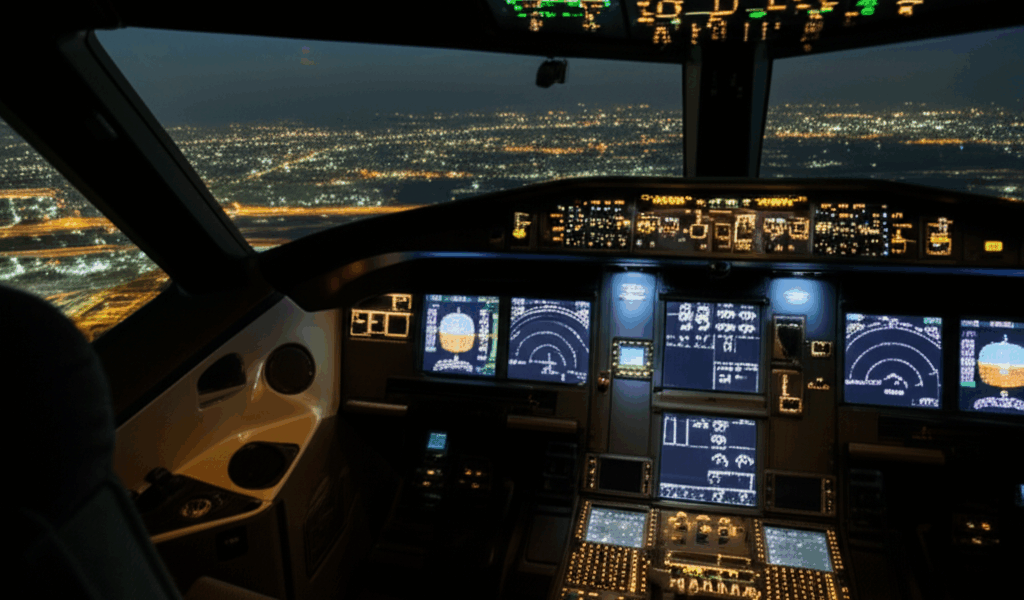
The Big Three of Virtual Airline Flying
Nothing in flight simulation matches the satisfaction of completing a realistic airline flight—proper flight planning, accurate systems management, and a butter-smooth landing at your destination. Three aircraft dominate the airliner add-on market for MSFS: the PMDG 777, Fenix A320, and iniBuilds A350. Each represents a different philosophy of what makes a great airliner simulation.
PMDG 777: The Industry Standard
PMDG has been synonymous with study-level airliners since their first 737 for Flight Simulator 2000. Their MSFS 777 continues this legacy with meticulous attention to systems accuracy and Boeing procedures.
Key Features:
- Complete FMC simulation with real-world logic
- Accurate autoflight systems including LNAV, VNAV, and autoland
- Detailed electrical, hydraulic, and pneumatic systems
- Comprehensive failure modeling
- Multiple variants: 777-200, 777-200ER, 777-300ER
Systems Depth:
PMDG’s philosophy is “if it works in the real airplane, it works in ours.” The 777’s systems respond like the real aircraft, including proper failure cascades, realistic fuel management, and accurate performance calculations. Real 777 pilots consistently praise its accuracy.
Pricing: Base model ~$70, expansion packs additional
Learning Curve: Steep. Expect weeks to become proficient with all systems. Extensive documentation and tutorial flights help, but this is a commitment.
Fenix A320: The New Challenger
Fenix Simulations arrived with their A320 and immediately established themselves as serious contenders. Their aircraft bridges the gap between casual accessibility and study-level depth with impressive polish.
Key Features:
- Intuitive EFB (Electronic Flight Bag) integration
- Realistic Airbus fly-by-wire handling laws
- Accurate FMGS (Flight Management and Guidance System)
- Simulated failures with dispatch implications
- Frequent updates improving systems and visuals
Systems Depth:
Fenix simulates the A320 to an impressive degree while remaining approachable. The fly-by-wire system properly models normal, alternate, and direct laws. The autoflight works like the real aircraft, including proper managed descent profiles and approach procedures.
Pricing: ~$55 for base aircraft
Learning Curve: Moderate. Airbus philosophy makes many procedures automated, and the included EFB simplifies flight planning and performance calculations. Most simmers can complete flights within the first week.
iniBuilds A350: The Modern Flagship
The A350 represents Airbus’s current widebody flagship, and iniBuilds has created an impressive simulation of this advanced aircraft. It offers the newest technology in both the real aircraft and the add-on itself.
Key Features:
- Modern glass cockpit with large displays
- Advanced fly-by-wire with sophisticated autopilot
- Realistic systems simulation improving with updates
- Multiple variants: A350-900, A350-1000
- Native MSFS integration for smooth performance
Systems Depth:
The A350 is newer to MSFS than the 777 or Fenix A320, and iniBuilds continues developing its systems. Current state offers good functionality for line operations, with deeper systems being added through updates. It’s approaching study-level but not quite there yet.
Pricing: ~$85-95 depending on variant
Learning Curve: Moderate. The modern interface is intuitive, and Airbus standardization means A320 knowledge transfers well. The biggest learning curve is the A350-specific systems differences.
Direct Comparisons
Visual Quality: All three look excellent. The A350’s modern cockpit displays are the sharpest, the 777’s textures show PMDG’s experience, and the Fenix A320 delivers great value for its price point.
Frame Rate Impact: The Fenix A320 is notably efficient, often running smoother than default aircraft. The PMDG 777 is heavier but manageable on modern hardware. The iniBuilds A350 performs well due to native MSFS optimization.
Flight Planning Integration: All work with SimBrief, but the Fenix EFB makes the process seamless. PMDG requires more manual work to import flight plans correctly. iniBuilds offers good SimBrief integration through their EFB.
Community Support: PMDG’s decades of history mean extensive community resources, tutorials, and liveries. Fenix has built a passionate community quickly with active Discord and forums. iniBuilds maintains solid support with regular development updates.
Which Should You Buy First?
Choose the PMDG 777 if:
- You want the most accurate Boeing experience available
- Long-haul flying is your preference
- You’re willing to invest time learning complex systems
- You value proven quality over cutting-edge features
Choose the Fenix A320 if:
- You want excellent value with study-level depth
- Short and medium-haul European-style flying appeals to you
- You prefer learning Airbus philosophy
- EFB integration and quality-of-life features matter
Choose the iniBuilds A350 if:
- You want to fly the latest technology widebody
- Long-haul routes with modern cockpit appeal to you
- You’re comfortable with ongoing development
- The A350’s distinctive design excites you
The Verdict
For most new airliner pilots, the Fenix A320 offers the best entry point. It’s accessible enough to fly successfully early while deep enough to reward years of learning. The price-to-quality ratio is exceptional.
For dedicated Boeing enthusiasts or those wanting the deepest available simulation, the PMDG 777 remains the benchmark. Nothing matches its systems accuracy.
The iniBuilds A350 serves pilots who want modern equipment and don’t mind supporting continued development. It’s a beautiful aircraft that grows more capable with each update.
Many serious airliner simmers eventually own all three, choosing their aircraft based on the route and mood of each session. That’s the luxury of a mature marketplace—you’re not limited to one philosophy.


Stay in the loop
Get the latest ultimate flight simulators updates delivered to your inbox.